I WANNA BE A COWBOY BABY! THE RISE OF COUNTRY MUSIC
 By Resonate | March 7, 2026
There’s an unmissable, new kind of twang echoing through TikTok and indie venues alike — and it’s coming from people in cowboy boots and hats.
Once dismissed by newer generations, the small-town heartbreak and dusty old pick-up trucks (you never let me drive) are riding back into the cultural spotlight, and TikTok ‘For You’ pages alike.
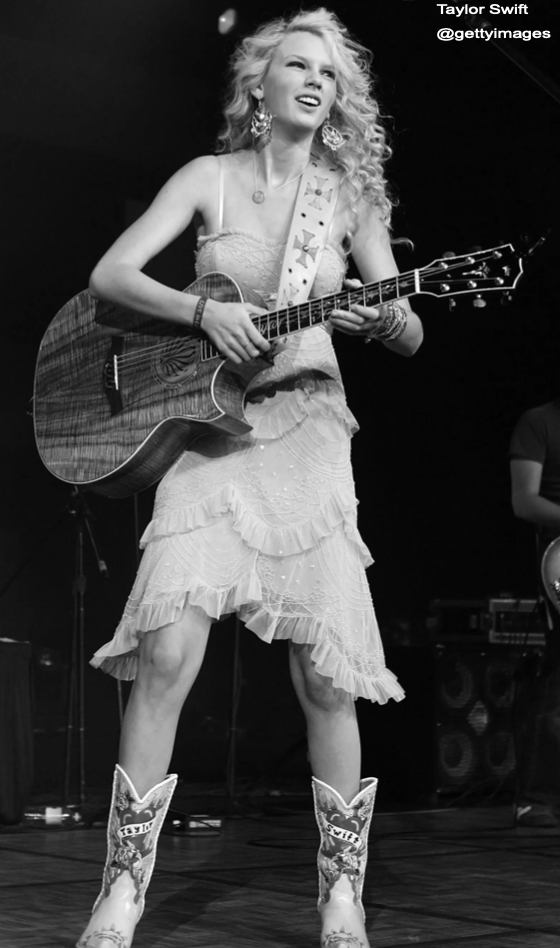
The 1990s and early 2000s saw country have somewhat of a global moment. Stadium artists such as Garth Brooks and Shania Twain are two of the stand-outs of the era, whilst a fresh-faced 15 year-old rising-star named Taylor Swift with a head-full of bouncing honey curls, and a guitar singing stories of teenage heartbreak and yearning, and Miley Cyrus’s country aesthetic in 2007’s Hannah Montana: The Movie put country music on the radar for younger generations. Arguably, it didn’t land quite the way it has now; for the majority of the late 2000s and 2010s, the mainstream dominated by pitch-perfect, polished pop, a genre both Swift and Cyrus later found the mainstream chart success we now attribute to them.
However, add TikTok, an obsession with genre-fusion, and a newfound desire for something more raw and relatable into the mix, and country has become something of a phenomenon.
In recent years, country music has had a much bigger breakthrough, one that reaches the mainstream and official charts. Noah Kahan’s 2022 single Stick Season surpassed 100 weeks on the UK official chart back in September, having been crowned the ‘Official Biggest Single of 2024’ by the Official Charts last year, and having a huge viral moment on TikTok in the build-up to its record-breaking longevity.
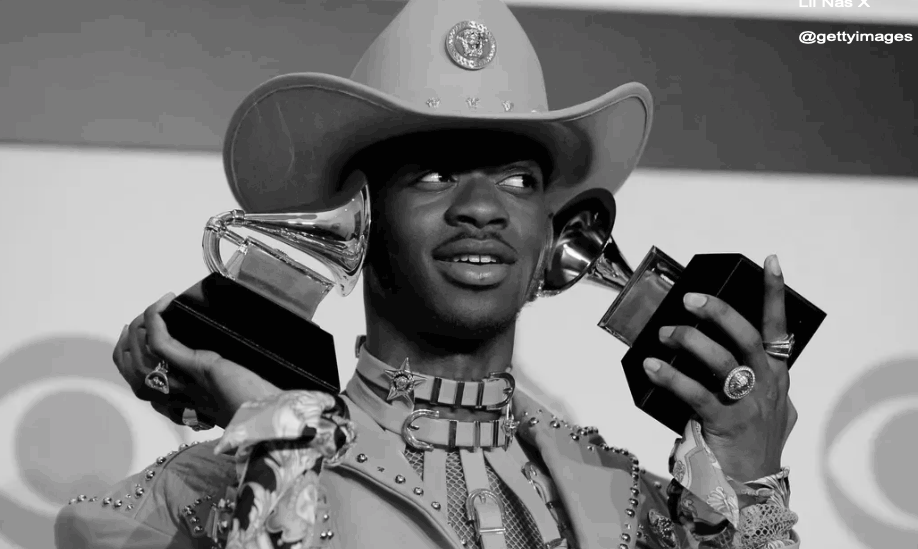
In 2019, Lil Nas X had a breakout viral moment with the release of country-crossover hit Old Town Road, a single which was then quite literally impossible to avoid for the remainder of the year.
Elsewhere, Chappell Roan’s single, The Giver, and glitter-soaked neon rodeo aesthetic saw us all adorning pink cowboy hats fit for the Pink Pony Club and her headline sets at this year’s Reading & Leeds Festival, whilst Beyoncé’s chart-topping country crossover album, Cowboy Carter, was received to critical acclaim. Former One Direction member Zayn Malik recently released a country-influenced album, Room Under The Stairs, and Zach Bryan has had consistent UK chart success with his relatable, authentic, and raw songwriting. Similarly, Post Malone successfully transitioned from rap into country music on his sixth studio album, F-1 Trillion, collaborating with country music legends such as Dolly Parton and Tim McGraw, and Lana Del Rey is hinting at a project within the genre.
And take SHABOOZEY’s A Bar Song (Tipsy), the country-rap fusion global hit with over 1.5 billion streams, became a top 10 hit, where it stayed for a considerable length of time, and which ranked as one of the Official Biggest Songs of 2024 in the UK.
Even The Wiggles have gone country, releasing Wiggle Up, Giddy Up! Featuring collaborators such as rising queer, modern country-songwriter, and the aforementioned Queen of Country, Dolly Parton. Yes, really.
At the end of November, Ireland’s alt-pop sensation, CMAT, played to a very sold-out Bristol O2 Academy on her very sold-out tour. Live, she dedicates arguably her most country-leaning track to all the “stinky Irish cowboys”, before instructing her crowds to perform the “Dunboyne Two-Step” for I Wanna Be A Cowboy, Baby!
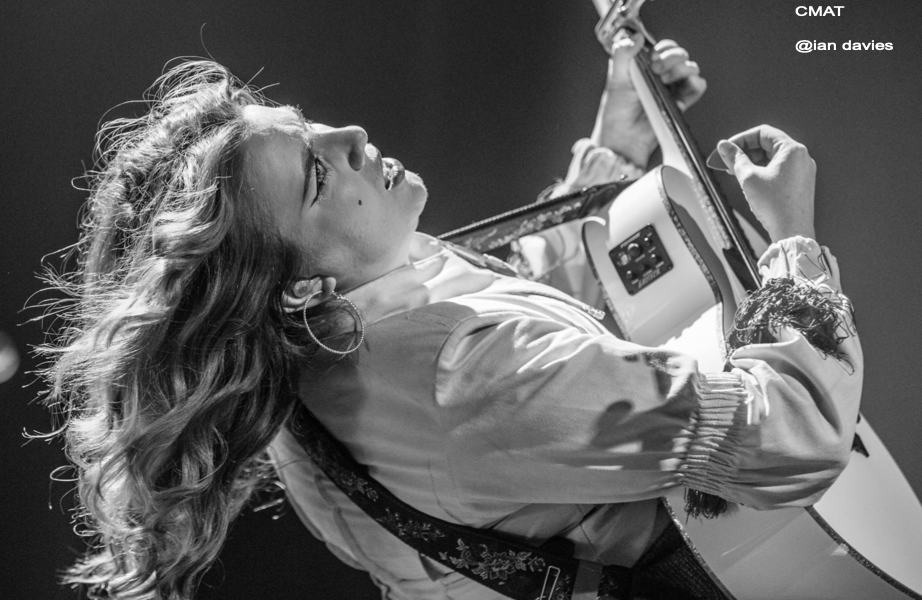
Watch back any of her sets online, or go and see her in person, and everyone in the audience always joins in with pure delight, whether front row, on the balconies or seated. Everybody sways, and the two-step doesn’t falter once, continuing until the final notes ring out. It feels like a novelty to see something like this at a modern gig. CMAT is paving the way in this renaissance; rhinestones, existential irony and all.
Even if there’s not a distinctive country sound to a song, you bet emerging and established contemporary artists alike are incorporating country aesthetics into their work.
According to Luminate, in 2024, 38% of Gen Z listened to country music, a 10% increase in comparison to 28% of listeners in 2022, this increase being likely attributed to the reclamation of American and Western aesthetics in popular culture.
In 2023, fast-rising Dublin alternative band Inhaler centred an entire music video, If You’re Gonna Break My Heart around a concept which leans into classic Americana and cowboy imagery, whilst still keeping their indie-rock identity. There’s everything from a Western bar, cowboy styling, and a dusty-frontier colour palette, tying into the slightly country-leaning sonics and themes of heartbreak. On tour, you can hardly see the band for cowboy hats littered around venues, fans putting great effort into decorating their headgear with rhinestones, glitter and images of the band. Think Harry Styles’s Love On Tour, but on a smaller scale. Similarly, The Last Dinner Party recently released This Is The Killer Speaking, a single with Western aesthetics, yet explores the very 2025 problem of the ‘ghosting’ outbreak.
The playing around of country aesthetics keeps both of these from becoming pastiche; however, it’s another prime example of country music creeping into mainstream pop culture.
But why is country music making its way into popular culture?
Arguably, in a time where popular music culture is perfectly polished, and acts such as Taylor Swift topping the charts with tracks about how life is being a billionaire engaged to another billionaire, and the increasing moral panic of AI generated music, Gen Z are searching for something more like what catapulted Swift to stardom in the first place; songs which feel real, authentic, and relate to the mundanity of everyday life.
Similarly, the pinnacle of modern country today is genre fusion, similar to what the early 2000s saw with Garth Brooks and Shania Twain’s incorporation of rock and pop elements. Current artists are now regularly mixing traditional country sonics with pop, rock, hip‑hop, and even electronic elements, and cross‑genre collaborations are becoming increasingly more common, making the music much more accessible to a wider, more mainstream audience.
In an age where social media is the primary driver for new hits, allowing niche songs to reach global audiences seemingly overnight, all without traditional radio support, we’re beginning to see a wider range of talent breaking through, country music being a particular genre taking centre stage, especially with major pop acts reinventing the sound, collaborating with the genre’s greats (see Tate McRae’s track with Morgan Wallen, What I Want) and expanding the boundaries.
And whilst the genre was originally a white, straight, cisgender male-heavy space, 2025 has seen a more inclusive shift, arguably bringing in a more diverse audience. For example, in February 2024, Beyoncé became the first black female artist to achieve a number-one country song.
Similarly, speaking to Newsweek in 2024, openly transgender country musician, Ryan Cassata, explained how current country artists are taking back the genre for “queer people, trans people and all minorities”, emphasising that making music in this genre – which before oppressors mistakenly thought to be their own, calling out oppression, bigotry and hate – is a powerful outlet for self-expression.
At its core, this country wave feels like an act of reclamation. It’s about taking a genre long rooted in tradition and turning it into something fresh, inclusive, and self-aware.
It’s not quite the cowboy renaissance anyone saw coming — more queer, more online, and much more pop-infused — but there’s no doubt about it: country music is cool now, and Gen Z has claimed it as their own. Resonate’s starting the sweepstake for when Taylor Swift returns to her country roots.
WORDS BY KATIE HILLIER