ALOKA: A SOUL IN BLOOM
 By Resonate | June 16, 2026
WORDS BY PHOEBE CULLEY

The Botanical Gardens on the University of Bristol campus seem exactly fitting for the place where we first meet one-woman star Aloka: warm, earthy, and alive.
At only 22 years old, one listen to her is enough to send you hurtling back to the golden era of soul music- classic, rich voices that soundtracked the 1960’s, such as Etta James and Aretha Franklin- all the way through to vibrant sounds we are listening to in 2026.
Usually armed with nothing more than her powerhouse of a voice and a passion for performing, she channels both nostalgia and freshness that feels effortlessly timeless.
Now calling Bristol home, Aloka is flourishing in the city’s music scene, where her vibrancy, natural charisma, and old-school talent are quickly making her one of the most exciting young artists to watch.
She would later tell Resonate that her music smells like “coffee and chocolate,” and although scents of tropical plants surround our interview, an image of a reassuring mug-full of exactly what’s described quickly conjures in the brain. With a deep love of music and a true art of performance, Aloka sat down to chat with Resonate to let us in on who she is and who she wants to become.
Aloka cuts through the noise of Bristol’s already buzzing scene in her own way – effortless, smooth and grounded without heavy trying. Her sound sits somewhere between jazz club haze and bedroom-daydream energy; true and passionate, but with a pulse that could spill onto a dance floor at 2 a.m. She calls it “soul and earthy stuff”, but there’s more grit than she lets on. That raspy, full voice wraps around you like smoke – warm, but with an unexpected bite.
She’s part of a new wave of artists who aren’t aiming for perfection; they’re chasing honesty.
What Aloka wants is connection – gigs that feel like conversations, songs that hit deep rather than loud. Her recent set at The Red Lion nailed it: no giant stage, no flashing lights, just a crowd that listened. “It felt warm,” she says. “That’s what I want my music to feel like.”
In a scene obsessed with fast fame and clean polish, Aloka’s music feels like rebellion through softness. It’s raw, human, and messy in the best way. The kind of sound that doesn’t just fill a room – it lingers in it.
After a stroll through the gardens, Aloka sparkles in the somewhat surprising Bristol sunlight when she talks about her first musical obsession – The Fugees. It’s not just nostalgia; she speaks about that CD like it raised her. “Mum got me the Fugees album,” she says, “and I remember listening to Ready or Not and thinking I was the coolest kid alive. The musicality of that album – it’s got this dark, punchy energy. Rap, attitude, rhythm. Everything hits.”
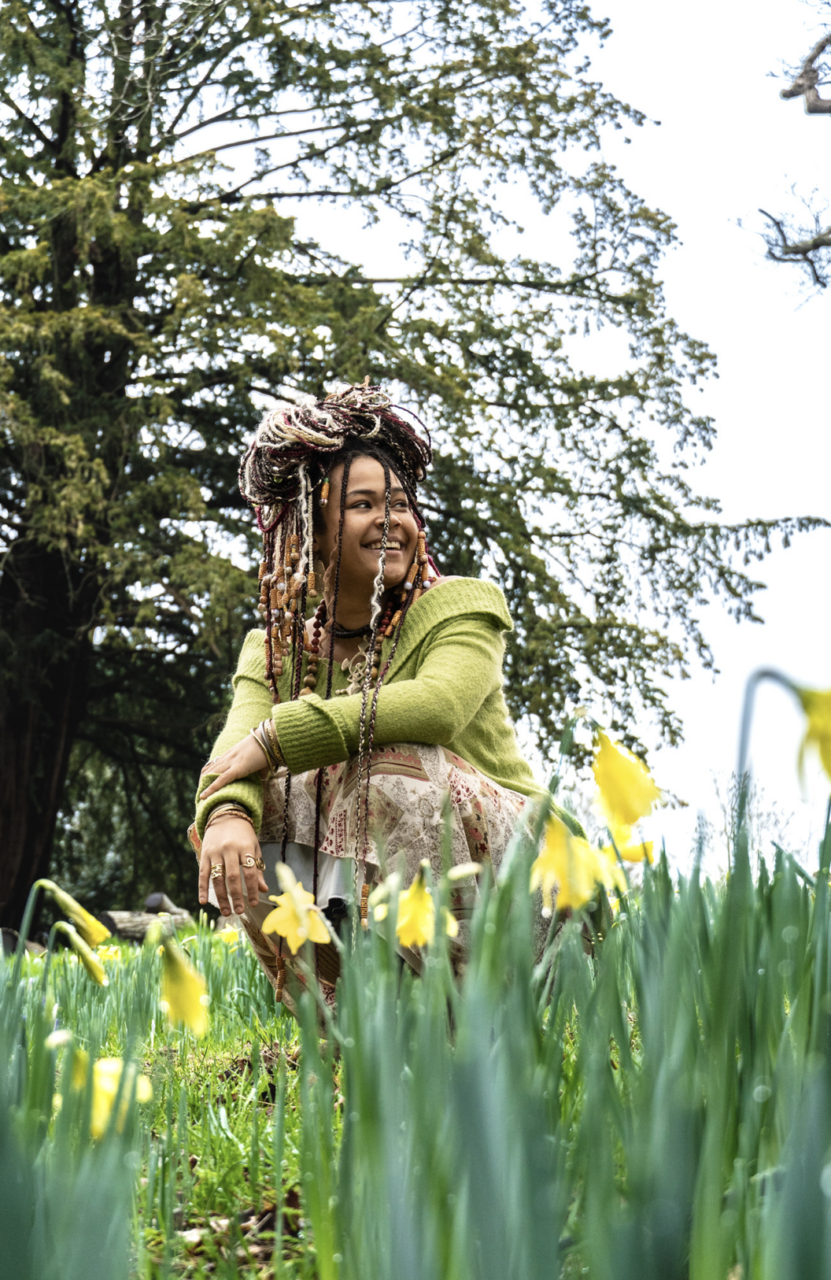
Does she see that influence in herself? Smirking now, she admits, “Not yet. I haven’t hit my villain era – when I do, that’s when I’ll learn to rap.”
It’s a bold claim to make while sitting cross-legged in a botanical sanctuary, students wandering past with iced coffees and tote bags. But that contrast is what makes it land.
There’s something quietly defiant about her. When she was grounded as a kid, her mum wouldn’t take away her toys – she’d take away her iPod. “I just wanted to listen to Lauryn Hill, Jill Scott, Erykah Badu – that’s all I cared about.” You can hear those echoes now in her own tracks, but she’s not copying, she’s learning. She’s soaking it all in and building something new – one verse, one feeling, one vibe at a time.
Simplicity could be seen to be Aloka’s mantra – shown in the stripped-down versions of her music -, but don’t mistake it for minimal. Her mission? “Show up, be honest, and help people feel.” Straightforward, sure, but pulling that off takes guts.
“When something is sung in a certain emotion,” she explains, “it can help us feel things we have trouble with. It comes easily to me, feelings, but when someone comes to me and says, “Wow, I didn’t even know I felt this way – it means the world.”
The artists we love and celebrate today in this genre effectively complete this task across their music: Chaka Khan, Raye, and Celeste.
Blending soul-giving sounds with “deep, heartfelt and arrhythmic” song writing as she describes, Aloka transcends talent – the type of artist you see and don’t forget until you realise no one has forgotten them in years.
Sitting with her, surrounded by peace and greenery, it’s easy to see what performing means to Aloka. For her, it isn’t about chasing perfection. She explains it’s more about surrendering herself to the audience. “Before going on, I do my ginger, honey, and lemon thing. Deep breaths. Tell myself I love myself,” she says. “Once I’m up there, it’s like everything else disappears,” her hands shooting upwards.
When asked how her music makes her feel, she answers, “You know those religious pictures of people with halos and light shining out of their heads- that’s me when I perform. That’s how it feels.”
And it’s believable. The air hums with warmth, and as she talks, her voice slips into an easy rhythm- unforced, magnetic, real energy. Next to the glasshouse that’s already full of light, Aloka brings a brighter beam to our interview.
After years of performing with her mum, Aloka is on a journey to discover who she is as her own artist after her battle with anxiety is evolving continually- “The thing that I find the hardest is being confident in myself. I find it easy to feel emotions, but I know a lot of people don’t work that way. Music is one way we can communicate softly with people and ourselves, because it’s less confrontational.
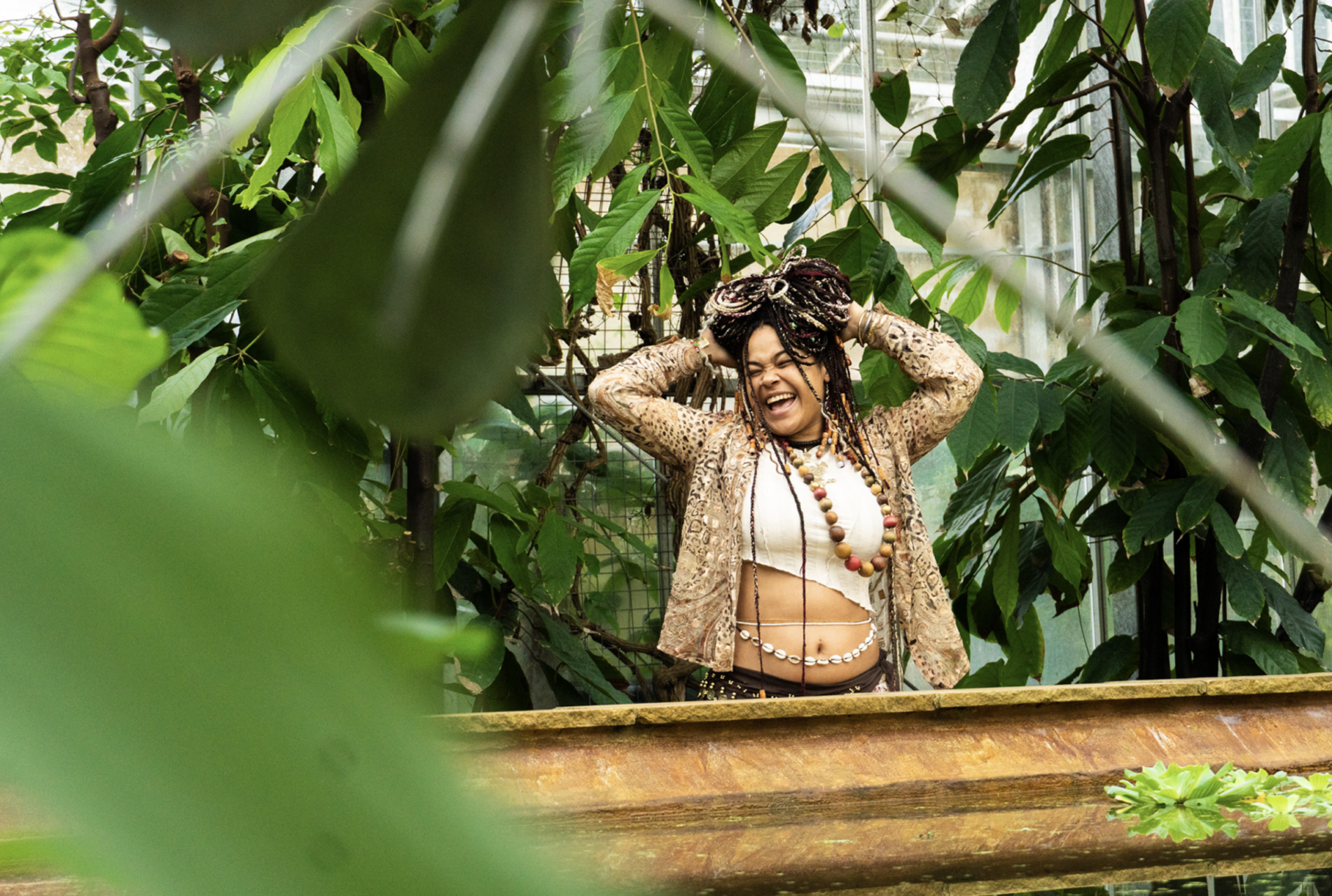
Two years into her being an independent artist, the conversation turns to what the future may look like for her and what she wants for her own artistry. Eyes full of sparks, she says, “It’s a big hope, but I’d hopefully like to be touring. Have an album out and a few songs that people start singing, and they think, “Yeah, that’s nice.” Taking a moment to think about her next words, a smile forms while she states, “I don’t want to make a couple of pop singles and be forgotten, I want proper music that speaks real stuff.” She added, “Venue-wise, being able to play at Ronnie Scott’s Jazz Bar in London would be the dream. It’s THE jazz club in London, and if you get booked in there, you are good.”
When asked what she’s doing now to make this happen, experimenting with jazz and soul harmonies, testing the agility of her vocals, and blending multiple genres is testing her talent. “I’ve been studying music my whole life, but I’m still learning what my voice can do.
As the last rays of the day shine, the gardens drone with that same warmth that she first used to describe her music. It’s clear after our conversation that Aloka is firmly planting the roots of her sound in the music industry, and there is no doubt that she will bloom into a generational, reputable product of her own hard work. She talks about tours, albums and songs that last a lifetime, but no rushing will be taking place.
Some artists are about adding to the noise – Aloka is the kind of artist that stills the noise until it’s deafening. She’s one to watch, and it will be impossible not to hear from her in the years to come.